EnglishGermanFrenchRussianItalianSpanishChineseBrazilianJapaneseKorean
Developed by    
EGOSOFT GmbH Logo

Official EGOSOFT Facebook Page!Official EGOSOFT Twitter - Follow us!Official EGOSOFT Youtube ChannelOfficial EGOSOFT Twitch Channel
logout
0
뉴스
현재
아카이브
게임
커뮤니티
지원
다운로드
회사
상점


Buy X-Series online
09.Sep.26 Interview with Lino: Egosoft Art Director  (0 댓글)
In the new episode of Inside Egosoft, Joey chats with Lino, Egosoft’s Art Director and 14-year veteran at the studio. Alongside his own artistic creations, Lino oversees the art team and the overall artistic direction of the X Universe. In this conversation, they discussed everything that goes into the visual experience of an X game: special rules that go into each faction’s designs, some of Lino’s favorite tools and techniques, and even his favorite bug.


Below, you can read some highlights from this episode. Thank you for reading and listening, and please tune in to Inside Egosoft on all major podcast platforms to catch the next episode!

Let us know in the comments if there’s someone from the team or a topic you’d like to see highlighted in a future episode.

🔗 YouTube
🔗 Amazon
🔗 Pocketcasts
🔗 iHeart Radio

Fourteen Years at Egosoft
Joey: Would you like to introduce yourself? How long have you been working here, or in the industry in general?

Lino: Yo, my name is Lino. I'm the Art Director—that's what they call me. I've been working for more than 14 years at Egosoft. I'm getting up to 15, another nice number. And it's really my first proper job. I started at Egosoft as an intern, so it's my first real company. I'm one of those weird people who don't jump jobs and jump ship, but just stay at one company because I like it.

Joey: And what does being the Art Director at Egosoft mean to you on a day-to-day basis?

Lino: It's less about actually doing art than people might think. It's mostly making sure that whatever needs to be done on the art side actually gets done. I'm coordinating a lot, planning tasks for people, making sure they have something to do and don't run out of work. And then, of course, there are all the meetings and discussions with game design and the story teams. So most of the time, it's actually not doing art. It's more about managing everyone and everything around it.

The First Ship
Joey: I know it's been 14 years, but I'm curious if you recall what your first art project was at Egosoft.

Lino: It was a small S-sized ship for X Rebirth. At the time, I had played X before—X: Beyond the Frontier was the first game I played—and suddenly I was at the studio making a spaceship for X. I was like, “Oh yes, cool, I can do a ship!”

I got concept art, because I couldn't design anything myself yet. I think I had about two weeks to make the ship. It was all new. I was so amazed by how clever the techniques we were using at the company were.

Of course, looking back at it now, I did so many things wrong. But for someone just starting out, not knowing much about low-poly workflows, atlases, trim sheets and all the techniques you learn, looking back at it, it was okay. I have good memories of when I started here, all the things I didn't know at the time, and how excited I was to be starting.

Learning to “Debug” Art
Lino: I fear the day when I look back at an asset and think, “No, this is perfect,” because then I know I've stagnated. There was one artist I really highly regarded who was here for one year, and he taught me design. Before that, I didn't really have an idea about it. I just had gut feelings.

I'd have a ship that looked good, but I didn't know why it looked good. I'd have a ship that looked bad, and I couldn't figure out why it looked bad. He gave me the tools to actually debug my art.

Joey: When you talk about debugging art, do you mean there's an aesthetic problem and you're looking at it almost like you're debugging why it doesn't look right?

Lino: Exactly. It's not technical. When I talk about debugging art, I mean the visuals. I have my checklist of design principles. Whenever I'm stuck, I open this text file and look through them.

If I'm stuck, I can look at the rules: “Is there a nice rhythm in the artwork?” “Oh, no, there isn't.” So I'll add rhythm.

Inspiration Starts with a Problem
Joey: Where do you tend to derive inspiration when you're working on art? What things tend to make an idea pop into your head?

Lino: I usually get a problem put in front of me. The problem is: design X, design Y. Then I look at the problem. “Okay, I have to do a Split ship. What do they do? How do they work?”

It's not like I'm sitting there thinking, “I have to do art now.” Having a problem gives you a riddle you want to solve, and with that riddle your mind immediately starts looking for solutions. The inspiration comes from brainstorming about the problem.

Of course, I love looking at nature—the crystals in nature, geometric shapes, maybe some maths. But everything around us shapes us. Over our whole lifetime we remember things and have feelings about certain things, so you dip into that and get inspiration from it.

Constraints and Happy Accidents
Joey: Constraints really help you be creative because you have a limited selection of things you can do. As opposed to having this infinite expanse of options where you can get paralysed, being constrained by your options can lead you to be a little more inspired and creative.

Lino: I absolutely agree. With no constraints, the direction is missing. The more constraints you get, the more the road is shaped.

Sometimes those rules also create happy accidents. I still remember the scrapping ship that takes in scrap and, as I call it, “poops out” a scrap cube. The scrap cube was pretty big, so I needed a ship that could expel a scrap cube in a certain direction.

That limitation—how big the cube was and which direction it needed to go—forced me to make the ship look really, really weird. But I loved how it looked in the end. The cube needs a free path, so I had to model the ship around this virtual empty space.

That forced the ship into this odd shape, but it fit the scrappy, piratey look really well. Then people can look at it and think, “Ah, that's why it looks like that. Of course the scrap cube needs to fly out there without hitting the ship.”

What Makes X4 Look Like X4?
Joey: Is there something that immediately makes an asset recognisable as something from X4?

Lino: For players, I can't say that I personally think there's a single asset that screams X4. If you showed a single asset standing on its own, it might look like it belongs to any space game.

Maybe it's everything together. You have cool space backgrounds, lots of spaceships, small ships you can get out of and walk around on, stations stuck together, all the different races. Maybe it's the mixture of races. We have the Split, and the Split are very unique.

You may see similar individual things elsewhere, but it's the combination of these crazy, different-looking things in one big sandbox. I can't say one single asset is really X4. It's the combination of things together that is really X4.

The Sense of Scale
Lino: I like having the on-foot walking, even though it's an incredible amount of work to make it function. But it's worth it for the sense of scale we can convey that way.

I love watching people play the game for the first time. It's beautiful when someone lands their ship on another ship for the first time, gets out, and realises, “Holy moly, this is big.”

“This is an S ship.” It's not just the letter S. Then you walk onto your first M ship and see how bloody big it is. “Holy—this is just an M ship. We still have L ships and XL ships.”

It gives them more value and atmosphere. Sense of scale is important.

I guess everyone can remember the first time they saw a Xenon I in the far distance. You get closer and closer, and it still takes so long to reach it. Then you realise, “Oh, this thing is actually huge.” And finally you arrive and think, “Holy… this is a crazy big ship. I probably shouldn't be here.”

Finding the Boron Design Language
Joey: How do you start when you're designing a ship for a given faction? Are there certain rules that you have to keep in mind, like for the Split or Boron?

Lino: I'll take the Boron because they're the most recent case where we had a full redesign, and I'm really proud of what we came up with.

Most of the races have been seen before in earlier X games, so I can't simply imagine whatever I want. I always have to look back at what came before. The X3 Boron were greenish, with bloated ships and organic shapes. So we said, “Let's take this further.”

Then you establish the ground rules. What are the Boron? Aquatic lifeforms. So maybe you look at things from Earth's oceans. Of course, you think of fish, but while digging for references I found things like phytoplankton. Their skeletons looked bloody amazing. They had these really complex, crazy shapes and interesting surface details.

We tried to distil why they felt that way and found a rule. Imagine a wave on the ocean. The crest is sharp, while the valley of the wave is smooth. That's one of the principles of Boron design.

Whenever you have a convex shape—a crease pointing outward—you sharpen it. Whenever you have a concavity or depression, you soften it. So you get this wave-like shape.

Designing Ships Around Metaphors
Lino: For the Boron, I try to convey metaphors. When you look at the ship, its shape should give you some idea of what it does. Dangerous ships should look dangerous.

A good example is the Boron destroyer compared with a Boron mining ship. The destroyer looks a little bit like a shark. Not literally, but it has elements of one. It has a kind of jaw at the front with repeating sharp shapes that look a little like teeth.

It looks dangerous. By adding these little sprinkles of inspiration, we get the metaphor that this is something dangerous. It's a hunter.

Then we have the gas miner, which has this very wide, open, smooth mouth inspired by filter-feeding fish. With that metaphor, you can see that this isn't dangerous. It's smooth. It probably isn't going to kill me.

They're both Boron, but even within one race's design I try to distinguish between something more dangerous and something friendlier.

The Paranid Rule of Three
Joey: The Paranid, of course, have three as their holy number. I imagine you try to do lots of trios when you're designing a Paranid ship, right?

Lino: Yes. I wouldn't quite call it a running joke, but with everything Paranid, we look for where we can put the number three.

If you have radial symmetry, it's three-way symmetry—120 degrees, because you're dividing a circle into three parts. If the Paranid consider three holy, then every time we see something Paranid in the art department we ask, “How can we put the number three in here and make it pure and holy?”

If it's not three, it's unholy and doesn't work. You try to get into how the Paranid might think. That also plays into their religious character. Everything is very cathedral-like and imposing in a weird way. We try to convey that through the architecture inside their ships and stations as well.

Why Boron Ships Aren't Full of Water
Lino: A lot of the races have quirks, and you try to lean into them. Of course, it's not always possible because of the limitations of how our game works and the fact that humans—or other creatures—need to be able to walk around inside these things.

You can't fill the Boron ships with water because there has to be a human inside. So we invent a rule: it actually makes sense that they wouldn't fill the whole ship with water because the water makes it heavy and means it can't rotate as quickly.

That's a nice excuse for why the ships aren't filled with water, and it saves us from having to invent some weird way of filling them with water.

Joey: I like to think the Boron are just really friendly guys. They want you to visit them.

Lino: That's a nice way of putting it. Okay, that's why we did it.

But we have a corridor in the Boron interiors where, on the right-hand side, there's a glass tube that's slightly hidden. From time to time, a Boron swims through there.

It doesn't happen very often, and usually you're just running through the corridor. Then I finally saw somebody on Reddit saying, “Oh, there's a guy floating through there.” I was happy somebody had spotted that little bit of work.

Keeping the Universe Visually Fresh
Joey: How do you keep everything visually fresh and prevent things from becoming too repetitive?

Lino: The fun thing about the design rules is that they're procedural in a way. Even slightly changing how you interpret one rule gives you a very different result.

By varying the underlying foundation of rules, I can force an artist to approach an asset completely differently. And the funny thing is that I'm not even sure every artist in the office is consciously aware of the rules or could name them. Over the years, you get a feel for them.

There are also artists where I don't really know what rules they're following. I just let them cook and get amazing stuff out of it. I think, “Oh yeah, that looks good. Let's make a rule out of this.”

I personally like to think in rules and hard rules. Other artists are completely different. They just flow and everything starts to come together beautifully. They're different approaches that converge on the same result.

When Fewer Polygons Weren't Faster
Joey: What kinds of problems are you solving when you're trying to make a model that both looks good and is performant?

Lino: When I was a little artist, I didn't know much about optimisation. We had one scene looking at a station where the number was something like 10,000 draw calls. At the time, the usual limit was around 1,000 to 2,000, so that was a pretty high number.

We have levels of detail. Things close to you are high-resolution and have all the detail. The further away you go, the fewer polygons you need. The artists had taken the assets and decimated them down.

Cool. The polygon count is lower, so everyone thinks, “Fewer polygons. It should be faster.”

No. It wasn't faster.

The station modules still had something like 15 materials, and those materials were causing 15 draw calls. The CPU was still screaming at the GPU, “Draw these 15 materials,” even though the thing was tiny in the background.

So I sat there for about three months making every LOD3 use one draw call, maximum two. And then the game ran so much better.

Over time, you just learn. I still twitch when I see an asset with too many materials. I can't get rid of it.

How the Xenon Cockpits Fool You
Joey: Is there anything in X4 that looks visually complicated but is actually achieved through a clever trick?

Lino: We fool the players sometimes. The Xenon ships are probably the best example.

You get into the ship and there's a monitor in front of you. It flickers. It's off, then it turns on, and then the real game appears to be rendered on the screen.

Those aren't actually screens. It's a completely normal cockpit.

To make the effect work, while that animation is happening and you're in the cockpit, we fade out the outside geometry of the ship. It looks like you're sitting inside the core of the ship looking through cameras or monitors to the outside.

We fool the player into thinking it's a real screen with this extremely high-resolution view. I'm probably breaking somebody's heart by telling them this, but it's just a normal cockpit.

We tried to find a cheap, quick way to get the same result without investing the technical effort needed to do it “properly.” I think that's a nice little hack for a good result.

Working with a Custom Engine
Lino: What's it like working with a custom in-house engine? Yeah, it's a struggle.

Of course, it's nice to have your own engine, but everything is custom-made. I won't complain too much because, in the end, what we've been able to build with it is incredible.

But as an artist, of course I look at Unity, Unreal and Godot. They have what-you-see-is-what-you-get editors. Everything is polished. And if you have a problem, you can Google it.

With a custom engine, if you have a problem, you first have to figure out who the heck implemented this thing. Then you find out it was somebody 20 years ago because that part of the engine has been carried over.

But the nice thing is that you can request features. You can say, “Man, I'd love to have this graphics feature,” and if you're lucky someone says, “Yeah, sure, let's do it.”

Over time we just improve and improve and improve the engine. I'm happy that we have it and we're independent rather than relying on somebody else, because then we can improve it and fix it ourselves.

I don't think you can make X with an engine like that. You can't have 10,000 or 20,000 ships running at the same time in a fully simulated universe, with every little transaction doing something.

Who does this? Why? Because we can. I love it. I love this game.

Building Space with Fractals
Joey: You mentioned that you use the IFS Renderer for fractal stuff. How does that factor into your art?

Lino: IFS Renderer—game-saver. Lifesaver, even.

When we started X4, I didn't really know how to make good space backgrounds and nice space environments. Everything was kind of handmade. We even had experiments where ink was dropped into water and photographed to produce something that looked like a space nebula.

But because I knew what had been done, I could see the ink.

Then I found IFS Renderer, which is fractal-rendering software. Normally you think of Mandelbrot-type things and cool fractal shapes, but there are ways of recombining things where everything kind of explodes and you get these space backgrounds.

Over time, I learned how to get things like supernova explosions. Because it's fractal, it's essentially a three-dimensional thing made from point clouds. You can fly around inside this world you've built, like a little universe, find a nice camera position and render it out.

It's really 3D. You're not just plastering 2D textures together. You're flying around, trying to find a nice angle.

Sometimes you rely on these small tools made by passionate people, and I can't thank them enough for doing that work and letting us use those tools to make good art.

Using Things in Unexpected Ways
Joey: What's the weirdest or most unexpected tool you've ever found useful for making art for X4?

Lino: The thing is, as soon as you use a tool, it isn't weird anymore. Once it's part of your pipeline, you think, “Oh yeah, that's normal.”

Sometimes it's more about where I get things from. I once took a picture of my phone screen because it was nice and dirty, and used that picture to make the glass in cockpits and on consoles dirty.

In game art, we do this kind of thinking outside the box all the time. For example, we have RGB channels. Any colour is defined using RGB, but those channels don't actually have to contain colour information.

You can encode other things in them—for example, position. Don't think of colour channels as only colour. You can abuse those data channels for completely different contexts.

Every Artist Has a Handwriting
Joey: How do you balance the artistic individuality of the different artists against making a unified visual style?

Lino: I have the advantage that I have people who are mostly interested in particular races. I use their interests and let them work on those races when I can.

Every artist has a handwriting. I have one artist who loves doing Xenon stuff. Another loves Paranid art. Etienne loves the Terrans.

Even if I asked one of them to work on a different race, their handwriting would still come through. If I ask someone who's used to Xenon to make a Boron ship, you might look at it and think, “Is there some Xenon in there?”

No. That's just the artist.

So whenever I can, I let artists work on the race they're most familiar with and happiest working on, where their handwriting already aligns with the style.

When Is an Asset Finished?
Joey: Once you're towards the end of the process, how do you know when an asset is finished?

Lino: As an artist, an asset is never finished.

Joey: Only abandoned.

Lino: For the producer, an asset is finished when time is running out. Mostly, we have to set time goals. You have X weeks for an asset. After those X weeks, it has to be done.

An asset is done when it's technically working and usable in-game. You try to do your best, and at some point you pull the brake and say, “No. Finish it. Wrap it up. Two days to get it into the game and make sure it's working.”

Then you move on to the next one.

Guiding the Player's Eye
Joey: Gamers famously don't look up. If you worked really hard on the ceiling, do you use visual guides to make people look up? Maybe a cable leading them towards it?

Lino: We try. When I have areas where I want people to look at something, I take everything out of my repertoire.

The problem with game art is that players can look anywhere, so you rarely have the opportunity to properly frame something. Lighting helps a lot. Gradients in lighting can say, “Here. Look there.”

Pipes are just a way to get a line into the composition. A line can be created with light and shadow, value contrast, colour contrast or a physical cable. Anything that guides the eye.

When you look at ships from the outside, I use a lot of lines to guide the player towards something. “The cockpit is there. I want you to look there.” “The shield generator is there.”

I'd love to proudly say that no line we put into the game is unintentional. Of course, sometimes it is. But with the main lines, there's an underlying reason why they're positioned that way.

You may not consciously notice it, but you feel it.

Creating a Feeling Without Explaining It
Lino: If you do it right, nobody really notices. Or they notice it, but they can't put their finger on why. If you do it wrong, everybody says, “Oh, this doesn't look great.”

We try our best to make things pleasing without people necessarily knowing why they like them. I'm completely happy if players don't know what we're doing and simply see something and say, “This is my favourite ship. It looks so cool.”

The thing I'm particularly proud of is conveying a feeling through an asset. As soon as I manage to evoke a feeling when you see something, I'm so happy.

Look at the Split architecture. The bridges are narrow and tall, so it feels like the walls are closing in and pressing down on you. The Boron are very open, wide, round and inviting.

It's about invoking some kind of feeling, and I hope it's the right one when you enter that place.

“More Atmosphere!”
Joey: If you could completely ignore performance, production time and practical limitations—if you had an army of designers working for you—what would you love to have in X4?

Lino: On the player-facing side: more atmosphere, exclamation mark.

Everything that makes it feel like a world. I would love to convey that creatures actually live there, doing their daily business. They're going somewhere to do something, and everything is there for a reason.

Small dioramas where you can look into the world and observe it. I love that feeling of looking into an aquarium, watching the fish going around doing their fishy business. I'd love to have more of that in X4.

Make the world feel full and rich, so around any corner there's something to explore. I'd love to have more time and resources to put things into the game that 99 percent of players will never see.

Because if you do find one, you think, “Man, that's cool. I'm going to tell my friends.”

Two Props Can Tell a Story
Lino: I remember seeing a picture from GTA IV of a used mattress outside, bent against a wall, with maybe two bottles of beer next to it.

Somebody sat down and put time and effort into thinking, “I want to tell this little story, and all I have is a mattress and a bottle of beer.” You instantly get images in your head. Why is this mattress here? Is somebody living there? Did they get kicked out of their flat and now they have to sit outside?

Somebody put the time and effort into taking two props and arranging them in a way that tells you a story. I adore these things. Good work, whoever that artist was. You'll probably never hear this podcast, but I appreciate that you put that mattress there and told that story.

Joey: Shout-out to the mattress guy in GTA IV.

Lino: Good guy.

Lino's Favourite Bug
Lino: My favourite bug in the game. Lovely story. In X Rebirth, at some point we implemented the external camera. You could click on any object and look at it from the outside.

Of course, you went onto your ship, clicked external camera, and saw your ship from the outside. Cool. This works. Then you target a station, click the station and say, “Show me the external camera view.” Cool. I see the station from the outside.

Wait a minute. The station is moving. Oh. I am the station. I can fly the station. So for a short amount of time in X Rebirth—on development builds—you could select a station and actually move the station to a different location like it was a ship. That was fun. I loved that.

Final Thoughts
Joey: Are there any final remarks or anything you'd like to share with listeners?

Lino: I appreciate that they're here. Be kind. Be curious.
posted by Gregory
13.Aug.26 Interview with Alexei Zakharov: Egosoft Composer and Sound Designer  (0 댓글)
In the latest episode of Inside Egosoft, Joey sits down with Alexei Zakharov, composer and sound designer for Egosoft since 2003. Alexei is responsible for most of what you’ll hear in X4: Foundations, from the atmospheric music in your favorite sectors to the hum of your ship’s engines.


Since Alexei and Joey share many similar experiences as longtime musicians and producers, this episode contains some musings about their shared experiences in the field such as writing styles, inspiration, tools and techniques, and the details that listeners don’t always notice.

Below are some highlights from the conversation. Tune in to Inside Egosoft on all major podcast platforms to listen to this episode, and watch out for a new one later this month!

Listen to the Inside Egosoft Podcast:
  • YouTube
  • Amazon
  • PocketCasts
  • iHeartRadio
  • Getting Started with Egosoft
    Joey: How did you first become involved with Egosoft, at the very beginning?

    Alexei: It was a long time ago. As far as I remember, it was summer 2003. I was a big fan of space games and movies when I was a kid. My first gaming platform was the ZX Spectrum. The most famous space game on the ZX Spectrum was Elite. I would call it the grandma of all space games.

    When I had my first PC, I got my hands on X: Beyond the Frontier, and I was really shocked. Finally, that was it - the one I'd always wanted. When they announced X2, I was following every piece of news, every update they had. But one day I thought, “No, I am a musician, and I have to do something.”

    “We Don't Need Any Techno Music”
    Alexei: I was brave enough to write to Egosoft and tell them how much I loved the previous games, how amazing they were, and how I couldn't wait for X2. I said that, as a composer, I would like to propose that they use my music. After several days, I got a response. They said, “Thank you very much for your feedback. We appreciate it very much, but sorry, we don't need any techno music.”

    I suppose that was some kind of misunderstanding or mistranslation. I was brave enough to send my track anyway, and maybe one day later I got a reply saying, “Oh, we like that. We like that a lot, and we definitely will use that music in our game.”

    Ten Minutes Before the Deadline
    Alexei: Then in August, they were making a rolling demo for X2. It was a demonstration of the game's engine, and they needed four different tracks for it. But there was a catch. I had to do it in a very tight time period. I think it was something like two or three days. I still remember delivering the tracks about ten minutes before the deadline. That was August 2003, I think. I would say that was the first time, and the first day, that I started working on X2.

    The First Track
    Joey: Do you recall the original demo you sent them?

    Alexei: The first track I sent them - the one they said was amazing - was a track called “Aurora.” You can find that on our X3: Albion Prelude soundtrack. I composed “Aurora” with my partner in crime, as I always say. His name is Pavel. We worked on trance tracks and electronic music tracks together, and he helped me a lot with composing “Aurora.” Before that, I hadn't sent any tracks. I had just said that I was making electronic music, and they thought I was making some kind of techno music.

    What Has Changed Since 2003?
    Joey: You've been a part of the musical identity of X for a pretty long time now. Looking back, has your approach changed much from your earliest work compared to today?

    Alexei: To be honest, I don't think much has changed at all. I would say that software and hardware have evolved. Hardware is always changing, software is always evolving. But in my approach to sound design and music design, I don't think much has changed. You gain experience while learning all the new hardware and new software, and you never stop learning. If you stop learning, your music will start to stagnate and degrade. I think that's the most beautiful thing about our experience: we always have to learn something new.

    Joey: You know, just the other day, I was actually talking about this over lunch with another friend of mine who's also a musician. We were talking about our old ideas, and how things I made when I first started - I almost wouldn't change anything about that. It’s the same brain. Musically, I’ve never really changed as a person. I love my old ideas. The only thing I would change, really, is that the mix would be a little better.

    Alexei: People always say that we tend to love our first music genres when we are just 13 or 14 years old. Our taste is established around that age, and after that, we never lose that. It will evolve - it will change a little bit - but you still love all the music you loved back in your teenage years. The same is for music creation. I started composing back when I was 14, and after that, I think I still have the same core approach.

    Shaping the Sound Together with Players
    Joey: Do you remember a particular track from the early X games that made you think, “Yes, this is what X should sound like”?

    Alexei: I don't think there's really one particular track, because it's a collaboration with the players. When you create something, you never know whether people will like it or not. But after some time, you get feedback from the players. You start to understand what people want to hear more of, what they don't like, and what kinds of compositions they appreciate more. So maybe it's a kind of collaboration with people afterward.

    Writing Music Players Remember
    Joey: How do you approach composing for a game where players can spend hundreds or even thousands of hours just existing in this universe?

    Alexei: I don't think I'm doing anything intentionally. I just do what I feel is right. I'm not trying to attach myself to any specific genre or mood. What I'm trying to do is compose not just a track, but a song, with the structure of a song. I'm always trying to add some motif or idea that people will remember, and maybe they'll try to sing it without even noticing.

    You may have noticed that a lot of game soundtracks nowadays are a bit forgettable. That's what I'm trying to avoid: making forgettable music.

    Where a Track Begins
    Joey: When you start writing a track for X specifically, how do you usually begin your process?

    Alexei: It's always different. I would say it's a combination of processes. I try to talk to our designers - the people responsible for narrative, game design, and lore. We have a discussion, we talk, and then I start trying to compose. But even before that, I'm always trying to have many, many ideas collected in my head.

    Even if I don't have a major task to compose a specific track, I'm always trying - morning, evening, midday - to sit at my keyboard and compose lots of ideas. If one of those ideas later connects with something we discussed, then I try to start a track from that.

    Waking Up with an Idea
    Joey: Maybe I wake up one morning and have an idea for something that sounds heroic, you know?

    Alexei: Exactly! One of my tracks happened exactly like you explained. I was sleeping - or trying to sleep, but couldn't - and in my head I suddenly had an idea. I wanted to make a kind of choir with an electronic choir sound and make it completely as one. So I just woke up and started composing a theme.

    Music and Player Emotion
    Joey: How much do you think about things like player psychology or emotions when you're writing music?

    Alexei: I don't think about psychology. I think about their feelings. I try to translate my own feelings through the music, and if people feel the same, I'll be happy. That's my goal.

    Joey: Would you say you're trying to guide emotion when you're writing music for the game?

    Alexei: I think the emotion I'm trying to produce through my music - the emotion I'm trying to convey to them - is about what that specific situation requires. If people in our company tell me they need this kind of track and this kind of emotion, I try to feel the emotion they're describing. I try to transform myself into that emotion.

    “Positive Sadness”
    Joey: Is there a favorite type of song for you, or a specific mood or atmosphere that you like to work with?

    Alexei: One of my favorite kinds of sound or mood is what I call “positive sadness.” A lot of my tracks have that positive sadness. They're sad tracks, emotional tracks, but they're never completely dark or hopeless. That's my favorite thing to do. But the second one is the opposite. I love doing something like a full-blown orchestra - like Hans Zimmer - plus maybe guitars and something like that, with a full trailer-style sound.

    The Signature Sound of X
    Joey: Are there instruments or plugins that have become part of your “signature sound”?

    Alexei: To be honest, the signature sound of X, I think, is the Virus TI - the Access Virus TI. That was the first hardware synthesizer I ever got. I would say it's the most versatile and one of the most beautiful-sounding synthesizers I've ever had. And yes, I would say that's maybe the sound of our game.

    Time Restraints and Finishing Tracks
    Joey: Does it come up often where you're working on music for X and think, “What if I remove this instrument and it fits the soundtrack better?”

    Alexei: To be honest, I never do that. The most beautiful thing in our work is the time restraint. You always have to do something very fast, and because we have that time restraint, you don't have time to overthink things. Throughout all these years, I've learned one thing: always finish your track. If you start a track, you have to finish it. You have to have that kind of discipline in you. But if you overwork it - if you spend much more time than you should - you can ruin your track.

    Joey: I have a personal style that drives one of my musician friends crazy. When I think I’m done with a song, I try to go through it and remove as many things as possible. It’s something I’ve done for many years. “Can I take out this drum kick? Can I remove this chord here?” Like I’m trimming the fat. He hates watching me work in the studio because I’ll delete things and he’ll say, “But that was really cool!”, and I’ll say, “Well, the message is the same even if it’s gone. So do I really need that part?”

    Alexei: I have a friend - his name is also Alexei - and he has the same problem as you. He has a lot of demo tracks composed, but few of them are finished. Through all these years, I’ve learned one thing: always finish your track. If you start a track, you have to finish it. Work until you like it, but with time constraints, that’s the problem. If you overwork, you will spend so much more time than you have to, and you will ruin your track.

    Electronic Music and Emotion
    Joey: There's this notion that electronic music feels less human than physical instruments. Do you think electronic music conveys emotion differently? Worse? Better?

    Alexei: Of course not. It won't communicate better or worse. It depends on how much you invest in that track. If you fully invest your emotions, your heart, and your soul into a track, any track can connect with people. Always try to put all your heart, soul, and compassion into the track. After that, even an electronic track can sound amazing.

    Joey: I agree. I think that being authentic is the most important part. Someone can pick up a guitar and play a really uninspired pop song that’s superficially human, but it’s the same thing you’ve heard a million times.

    Or someone could spend hours behind some synthesizers and program something that’s straight from their heart. Something that moves you, that makes you feel what they’re feeling. The most important thing is that you’re authentic and truly communicating your ideas.

    Something I like to point out is that when I’m working on music - in my brain - I’m not making any mistakes in my ideas. People will point to older music where there’s less editing and say, “I like all the mistakes and sloppiness. It sounds more human.” 

    But, for me, when I’m imagining a riff in my head, there aren’t timing mistakes. It’s a perfect groove in my brain. It’s just that my body is limited. If I can edit a riff I recorded so that every chord is where I want it - that, to me, is also very human. It’s exactly my idea, with no limits.

    I think people jump to, “Well, he quantized his drums, so he sounds like a robot.” Well, no, that’s what’s in his heart. That’s exactly what his idea is. That’s also authentic.

    Alexei: Yeah, and sometimes, people will say, “Can you hear? He sounds like a robot!” when someone is playing amazingly. But when we try to do that… So we use randomizers and stuff.

    Joey: That’s true. We end up using randomizers on the synths and pianos just to make the playing sound worse.

    Three Instruments for the Next X Track
    Joey: Say you have to make the next X song with only three instruments or plugins. What do you keep?

    Alexei: Does the DAW count as software I have to include?

    Joey: Oh, that'll be free. You have the DAW.

    Alexei: Okay. Then it's a very, very easy question. The first one is the Virus TI, as I've already told you, because it's an amazing synth. The second one is the Korg Wavestate. It's a very interesting and intricate synth based on waveforms. And the third one, I would say, is the Nord Stage 4. That's my main keyboard. It has an amazing piano, amazing sounds for classic instruments like organs and Rhodes, and it also has an amazing synth engine. I think those three would work.

    A Genre Still to Try
    Joey: Is there a particular genre or musical direction that you haven't explored in X yet that maybe you'd like to experiment with someday?

    Alexei: To be honest, I think we've tried a lot of stuff. So maybe something like Meshuggah. We can try that. Maybe later.

    Joey: Oh man, I would love to hear “Bleed” while I'm in the middle of a dogfight. That would be so awesome. Definitely call me if you want to do something like that. I would love to break out my guitar and throw some riffs down.

    Details Most Players Won't Notice
    Joey: Is there a production technique that you use a lot that maybe listeners wouldn't notice you're using?

    Alexei: One thing is little melodies from old tracks that people love. I'm using them very precisely and very subtly in small emotional moments. In one track I recently wrote, I had this idea for a theme using different instruments from Asia and the Middle East. The track starts with a chord progression that's usually associated with Middle Eastern music. Then the second part of the track uses a classical chord progression. If you know what I've just told you, the track completely changes for you. Most people will never notice it.

    Joey: I’m excited to hear how you melded those styles since it sounds difficult to pull off. Those are very different writing styles.

    Alexei: For our music and what we do for the game, I think it’s not that important to just follow the rules. My goal is not to follow the rules. My goal is to make people happy and make them listen to tracks that they want to listen to, and that I would like to listen to myself.

    Breaking the Rules
    Joey: I think it's useful to learn some theory, but only because it gives you ideas for how to bend the rules. Knowing the rules just lets you break them with style, I think.

    Alexei: I don't even have a music school education. I always had to learn everything on the run. I always had to adapt to everything. One of my very good friends once told me something. He was a violinist. He said, “Alexei, if you had ever had a proper musical education, you would never have written the music you've written.” When you have that knowledge - when you know what you can do and what you can't do - that's amazing. But there's also something about being completely free.

    Joey: I think we’ve discussed before how we’re both self-taught musicians. I learned things because I thought they’d be useful to me, but not much else. I think theory is most useful for giving you a vocabulary for your ideas.

    Alexei: Yes, that helps a lot. That’s why I also learned some theory myself. Many good composers are completely classically trained, but look at Hans Zimmer: he is not, but he’s the  biggest one in Hollywood. I think many people don’t appreciate him because he is like that, but because of that, he is very different from the others.

    The Latest Track Is the Best One
    Joey: As we look back at all the music you've made for the X series, is there a particular track or soundtrack that you're personally most proud of?

    Alexei: To be honest, there isn't one particular track or big soundtrack I can name. I would say the last one is the best one. The last one I wrote was last week, and you'll hear it someday. Our listeners will too. I think it's just an amazing track. Just an amazing track.

    Final Thoughts
    Joey: Do you have any final words you'd like to share with listeners or people who play the games?

    Alexei: I just want to say that I really love and appreciate your feedback. I love seeing what you're writing and commenting. Your feedback is what makes me make my music even better. Thank you very much, guys.
    posted by Gregory
    13.Jul.26 Interview with Matthias: 18 Years of X  (3 댓글)
    In our latest episode of Inside Egosoft, Joey sits down with Matthias, one of Egosoft's longest-serving developers, to discuss almost two decades of working on the X Universe.


    Though his title could be described as “gameplay programmer,” Matthias' efforts reach far beyond that role. In this conversation, we discuss topics ranging from AI flight systems and X4's design philosophy to the evolution of the game's 3D map, resource simulation, and plenty more.

    Below are some highlights from our chat. You can tune in to listen to the conversation on all major Podcast platforms. Keep an eye out for another episode later this month!

    Listen to the Inside Egosoft Podcast:
  • YouTube
  • Amazon
  • PocketCasts
  • iHeartRadio
  • Wearing Many Hats

    Joey: You're generally described as a gameplay programmer, but I think people hear that and picture someone working in one very specific area. How would you describe your role in a way that better reflects what you actually do?

    Matthias: To be honest, I'm not even sure that "gameplay programmer" really encompasses what I do. It's the label that fits best, but I do a lot of things that aren't strictly gameplay.

    I often oversee design implementation, so it's useful to have a broad overview of the gameplay systems and to have worked on many of them. But I also spend a lot of time on lower-level supporting systems that players might never directly notice.

    Joey: You've touched on AI, physics, the map system and so many other areas over the years. How did your role expand into all those different systems?

    Matthias: It happened very gradually. I didn't join Egosoft thinking, "I want to work on everything."

    When I started more than eighteen years ago, I had just come out of university. I didn't even have a programming degree—I studied physics. That involved a little programming, but it's nothing like game development. The two are so different that they're barely comparable.

    I joined as an intern, and in the beginning I was really trying to figure out what I was actually good at and where I could contribute. I was interested in a lot of different areas, so whenever someone asked, "Would you like to work on this?" I usually said yes. Quite often I even volunteered myself. If something sounded interesting, I'd ask if I could try working on it.

    Over time, that naturally led to me becoming involved in more and more parts of the game.

    Realism in Gameplay

    Joey: You mentioned studying physics. Does understanding real-world physics ever make it frustrating to work on a game where things obviously have to behave differently?

    Matthias: Laughs. Yes, absolutely. There are plenty of things in X4 that are completely unrealistic, but we do them intentionally because otherwise you'd practically need a degree in physics just to fly a spaceship.

    Our flight model, for example, behaves much more like flying an airplane than flying a real spacecraft. We have top speeds, ships bank into turns—it isn't realistic spaceflight at all. But that's simply what this kind of game is. Even people who really enjoy realistic physics generally accept that compromise.

    There are a few games that go much further with realism and do it very well, like Kerbal Space Program. But realism is the entire focus of that game.

    Variety Keeps Things Interesting

    Joey: You've worked across so many different systems over the years. Is that something you've naturally been pulled toward, or do you actively enjoy having that much variety instead of specializing in one area?

    Matthias: I really enjoy the variety. Not only do I like working on different gameplay systems, I also enjoy switching between completely different kinds of work. Programming is still what I spend more than ninety percent of my time doing, but I'm also regularly involved in game design discussions, helping shape ideas before they're implemented.

    I've done a little writing in the past as well—not a huge amount—but enough to really enjoy it. I even ended up doing a small amount of voice acting once.

    Joey: Really?

    Matthias: It was kind of a funny story. While we were working on the Timelines DLC, there was a character who had become trapped aboard an alien ship and had a few desperate voice lines. At the end of development, I happened to catch a really bad cold. I was called and asked if I'd be willing to record the lines because my voice already sounded rough enough for the character. The idea was that we’d process the recordings afterwards. I recorded four or five lines with my cold, and... they ended up using them exactly as they were.

    So now I'm Kyle Brennan. In German.

    "All Games Are Impossible"

    Joey: From the outside, X4 almost feels impossible to make. I honestly don't know how you all manage it sometimes.

    Matthias: Laughs. Low-key, all games are impossible to make. I've talked to enough developers that you eventually realise every game has its own impossible problems. You look at another game and think, "I'd love to work on something simple like that." Then you meet those developers, they explain what's happening under the hood, and suddenly you realise they have an entirely different set of incredibly difficult problems. Developers always fill the complexity up to their capacity. Even if we were making a much simpler game, we'd simply put our effort into different areas.

    Building X4's 3D Map

    Joey: You've also written a lot of the code behind X4's 3D map. When you first started working on it, what were your core goals? Were there any design pillars you kept coming back to?

    Matthias: The map actually dates back to the development of X Rebirth. Early in development, we had a much more abstract navigation map. It was essentially a collection of nodes connected by lines, almost like looking at a subway map. You could see which highway connected to which zone, but it wasn't really a representation of the universe itself. It worked, but it wasn't especially intuitive to navigate, and every time something changed in the game world, someone had to manually update that representation.

    So we started asking ourselves whether there might be a more dynamic solution. During one meeting, I suggested that instead of creating a separate map, we simply render the actual game world as a miniature hologram. I was picturing something similar to the tactical displays in Battlestar Galactica—a holographic representation of space that reflected the universe itself. Most people were fairly skeptical. The response was essentially, "I don't think that's going to work." So I went home that evening and decided to try it anyway. Within about an hour, I had a prototype running. I could already see my current sector, the highways, stations, and ships moving around in real time. From there, the idea gradually evolved into the map players know today.

    Originally, it wasn't the fully interactive 3D interface we have now. At the time, we still hadn't solved how players would comfortably interact with something like that from inside a cockpit. The biggest evolution came with X4, where we introduced seamless zooming. Instead of jumping between separate map layers, you can smoothly zoom from a single station all the way out to the entire universe and back again without changing modes. Early on, we also decided to represent sectors as hexagons. They're futuristic. Science fiction likes hexagons. So... we used hexagons.

    Designing for Readability

    Joey: Earlier, we talked about readability in relation to ship movement. The map feels like another place where that balance becomes important. It needs to accurately represent the simulation, but it also has to remain understandable for the player. How do you balance those goals?

    Matthias: Mostly through constant iteration. We build something, test it, figure out what works and what doesn't, then adjust it. We're still doing that today. Sometimes we'll discover that once you zoom out far enough, there's simply too much information being displayed. Not only does that become visually overwhelming, it can even begin affecting performance. So we'll ask ourselves whether ship icons should start fading out slightly earlier, or whether certain information only needs to appear at closer zoom levels.

    Generally, we've tended to err on the side of showing players more information rather than less. Interestingly, whenever we've reduced visual clutter at particular zoom levels, we've almost never received negative feedback. Most of those changes simply make the map easier to read.

    A Living Economy

    Joey: By the time this episode goes live, 9.00 should be live, so we can probably talk about some of the new systems. One of the biggest changes, at least from my perspective, is the overhaul to resource distribution and depletion. What prompted that?

    Matthias: Recently we've placed an even greater emphasis on performance, memory usage, and save-game size than we already had before. This new resource system had actually been proposed several years ago, primarily because it opened up some interesting game design opportunities. But alongside those design improvements, it also brought a significant technical advantage. The amount of resource data we now need to store in save files is dramatically smaller.

    In some long-running saves under the previous system, the resource data alone could account for roughly twenty percent of the entire save file. That's a huge amount of data. Reducing that has made a very noticeable difference.

    Creating Stories Through Simulation

    Joey: Resources are really the foundation of X4's entire economy. Where do you even begin when redesigning something that fundamental?

    Matthias: Laughs. Very carefully. The first step is always deciding what your design goals actually are. One of the things I've wanted for quite a long time is to create natural peaks and valleys within the mining economy.

    Those fluctuations can then ripple outward through the rest of the game's economic simulation. That's interesting because fluctuations create opportunities. If supply and demand remain perfectly stable, prices eventually settle around an average value and trade becomes predictable. There's very little room for players to recognize an opportunity and capitalize on it, but if resources fluctuate naturally, the economy begins creating those opportunities on its own.

    Of course, there's another side to that: we still need to make sure the economy remains healthy overall. The universe can't simply run out of resources. Factions still need enough materials over time to keep building ships and maintaining their economies. So it's always about finding the balance between meaningful fluctuations and long-term stability. Another important goal was rewarding players who actively explore. Someone who's willing to manually prospect for resources should be able to find richer deposits—or rarer materials like Nividium—and gain an advantage from doing so.

    Creating Timelines

    Joey: You also played a major role in creating Timelines. How did that project originally come about?

    Matthias: I was actually the person who first pitched the idea. Interestingly enough, the inspiration came from a science-fiction novel called The Gone World. It's a time-travel story about an approaching apocalypse. I really enjoyed it, although I wouldn't exactly call it cheerful. It's a very dark book.

    If you've read it, you'll probably recognize a few ideas that eventually found their way into Timelines—things like traveling to speculative futures and bringing people back from those futures. The original concept was quite different, though. Initially I imagined it as a standalone game built using a relatively small number of new assets. The focus would've been on replayable scenarios with modifiers. For example, you might replay a mission, but instead of fighting Xenon, you're suddenly fighting Kha'ak.Things like that.

    When I pitched the concept to Bernd, however, he was looking for a new DLC for X4 rather than a separate game. So we reworked the idea considerably. Many of the core concepts survived, but they were reshaped to fit naturally within X4 itself.

    Engineering and Design

    Joey: You've spent a lot of your career solving technical problems, but Timelines also put you into a much more creative role. Does your approach change between programming and designing?

    Matthias: Very much so. Programming usually starts with a technical plan, although sometimes I just start building something and figure it out as I go.

    Design is much more iterative. The spacesuit scenarios, for example, started as simple grey-box levels where I was just experimenting. What feels fun? What kinds of movement stay interesting? Other scenarios, like Flight of the Dragonfyre, started almost like writing a screenplay. I laid out the sequence of events first, built a rough mission structure, then gradually filled in the dialogue and gameplay over time.

    Guiding the Bigger Picture

    Joey: Working across so many different gameplay systems, has that naturally led you into more of a creative leadership role?

    Matthias: I don't know if I'd say it naturally pulls you in that direction, but working across so many different systems does give you a very broad understanding of how everything fits together.

    I'm only a real expert in a handful of those systems, but I've worked closely enough with all of them to understand what's technically possible and how different features interact. That means even when I'm not the person implementing a feature, I can often help shape the direction it's taking. Someone might come up with a really good idea that simply isn't feasible in the way they're imagining it.

    Instead of saying, "That can't be done," I can usually suggest another approach that achieves the same goal while fitting within the realities of the engine.

    Creativity Through Constraints

    Joey: Back when I was a reporter, one topic that came up surprisingly often was the idea that technical constraints can actually make people more creative. I saw exactly the same thing during my years producing music. Having limitations often forces you to come up with ideas you never would have considered otherwise.

    Matthias: Absolutely. It's the blank-canvas problem. If you sit someone down and simply tell them, "Write a story," it's surprisingly difficult to even begin. But if you tell them, "Write a story about a cat attending a Victorian ball," suddenly ideas start appearing immediately.

    Constraints give creativity direction. That was actually one of the things I really enjoyed about Timelines. Because each scenario is completely self-contained, we don't have to worry about the long-term health of the sandbox simulation. Nothing that happens inside a scenario carries permanent consequences into the wider universe. That freedom actually opened up a lot of possibilities. We could build situations that would never make sense inside the persistent sandbox while still creating interesting gameplay.

    Joey: It really lets you step away from worrying about the broader simulation and instead focus on creating a memorable experience. In the sandbox, you're always thinking about how one change might ripple throughout the entire universe. Inside Timelines, you can simply ask, "What's the most interesting scenario we can build?"

    Matthias: Exactly. Otherwise you'll carefully script a showcase battle …and then a Xenon fleet suddenly wanders through and destroys everything. Sometimes that's exactly what the sandbox does.

    Looking Back at Old Code

    Joey: You've now worked on the X series for nearly two decades. Do you ever revisit something you wrote years ago and immediately wonder why you did it that way?

    Matthias: Laughs. Only on days that end in "Y." It happens constantly. There's a quote I once heard—I don't remember the exact wording—but it was something like: "If you don't look at your old code and cringe, you haven't grown enough as a programmer."

    I think that's true, and it doesn't only apply to programming. It applies to design as well. I regularly look back at something I wrote years ago and think, "What was I even thinking?" Then I check the version history ...and of course it was me.

    Joey: I think that's true of almost any creative skill. If you never look back at your old work and see room for improvement, you're probably not progressing very much.

    Matthias: Exactly. Although it does lead to one of the most satisfying experiences a programmer can have: Deleting old, terrible code.

    Looking Ahead

    Joey: Looking ahead, are there any systems you're especially excited to continue developing?

    Matthias: We haven't spent much time on it recently, but I think there's still a lot of potential in the mass traffic system.

    Those little civilian ships flying around stations are mostly decorative at the moment. As long as they work and don't look obviously broken, they generally aren't a high priority, but I think improving that system could do a great deal for immersion.

    Having those ships behave more naturally—doing more than simply following predefined paths—would make stations feel much more alive.

    Joey: I'm a big fan of the mass traffic ships. I always enjoy seeing as many of them as possible around stations.

    Matthias: Me too. They're also important for communicating scale. You need something small to truly appreciate something large. If you only see a station by itself, your brain has very little sense of how enormous it actually is. But when you see tiny civilian ships moving around it, suddenly you have a familiar point of reference. Your brain immediately understands just how massive that station really is.

    One Feature That Feels Like His Own

    Joey: Is there one feature in X4 that feels unmistakably yours?

    Matthias: Probably spacesuit gameplay. I've always loved the contrast between the enormous scale of stations and capital ships and then suddenly experiencing everything from a human perspective.

    One of my favourite games is Hardspace: Shipbreaker. I'd love to do even more close-up spacesuit gameplay in X4 in the future.

    Joey: I actually have 100% completion in Hardspace: Shipbreaker.

    Matthias: Laughs. Me too. It's such a good game.

    Final Thoughts

    Joey: Before we wrap up, is there anything you'd like to leave listeners with?

    Matthias: Play more space games. They're good, in my opinion.

    Joey: Laughs. I think they're alright.
    posted by Gregory
    01.Jul.26 X4: 파운데이션 최소 시스템 요구 사항이 변경될 예정입니다
    X4: 파운데이션을 지속적으로 개발하고 확장해 나가면서, 저희는 게임의 자체 엔진과 전반적인 성능을 개선할 방법을 끊임없이 모색하고 있습니다. 엔진이 할 수 있는 한계를 계속 확장하기 위해, 향후 업데이트의 일환으로 그래픽 API를 Vulkan 1.4로 업그레이드할 준비를 하고 있습니다. 이 작업은 9.00 이후의 다음 대규모 업데이트에 포함될 예정입니다.


    이러한 필수적인 기술적 도약으로 인해, 곧 X4: 파운데이션의 최소 GPU 요구 사항을 업데이트할 예정입니다.

    왜 이런 변경을 진행하나요?
    Vulkan 1.4로의 전환은 저희에게 중요한 기술적 이정표입니다. 소규모 팀인 만큼, 레거시 하드웨어 지원과 최신 개발 사이에 자원을 분산하는 것은 큰 부담이 되어왔습니다. 구형 하드웨어를 계속 지원하려면 더 많은 코드를 유지해야 하며, 활용할 수 있는 그래픽 기능에도 제한이 생깁니다. 이 새로운 표준을 중심으로 엔진을 간소화함으로써, 저희는 더욱 효율적으로 작업하고 게임에 기술적 개선을 지속적으로 제공할 수 있습니다. 간략히 말씀드리면, Vulkan 1.4만을 사용하게 되면 저희가 X4의 미래에 100% 집중하는 것이 가능합니다!

    새로운 최소 GPU 요구 사항
    계획된 업데이트가 적용된 후에, 최신 버전의 X4: 파운데이션을 실행하기 위한 새로운 최소 그래픽 카드 요구 사항은 다음과 같습니다.

    NVIDIA GTX 1060 혹은 AMD RX 5300 및 동급 (Vulkan 1.4 지원 필요)

    최근 Steam 하드웨어 설문 조사 결과를 보면, 이번 변경으로 영향을 받으실 플레이어는 극히 일부에 그칠 것으로 확신합니다.

    내 PC가 새로운 요구 사항을 충족하지 못하면 어떻게 하나요?
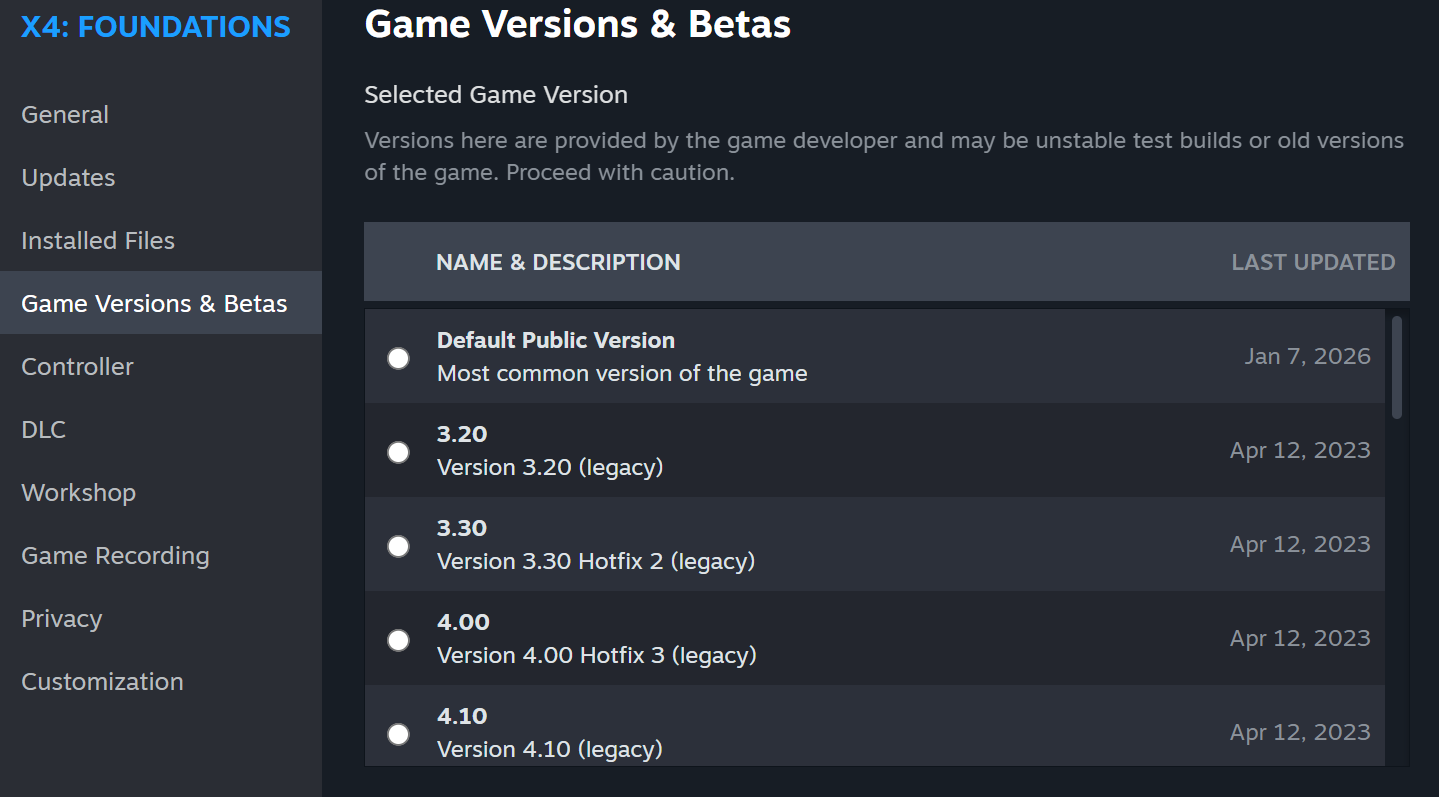
    무엇보다도 가장 중요한 건, 현재 구형 하드웨어에서 플레이 중이시라면 앞으로도 게임에 대한 접근 권한을 잃지 않습니다. 일부 플레이어가 구형 하드웨어를 이용해 X 우주를 탐험하고 있다는 점을 알고 있으며, 계속해서 플레이하실 수 있도록 하고자 합니다. 이미 얼마 간 그래왔듯이, Steam의 "게임 버전 및 베타" 브랜치 시스템을 통해 X4의 이전 버전에 대한 접근을 계속 제공할 것입니다.

    이전 버전에 접근하는 방법
    • Steam 라이브러리에서 X4: Foundations를 마우스 오른쪽 버튼으로 클릭합니다.
    • '속성...'을 선택한 다음, '게임 버전 및 베타' 탭으로 이동합니다.
    • 나열된 목록에서 원하시는 이전 빌드를 선택합니다.
    • Steam이 선택한 버전을 다운로드한 후, 평소처럼 플레이할 수 있습니다.
    이 과정을 완료하면, Steam은 '플레이' 버튼 옆과 Steam 클라이언트 왼쪽의 게임 목록에 있는 X4: Foundations 제목 옆에 현재 선택된 게임 버전을 표시합니다.

    이번 사전 안내로 여러분께서 충분한 시간을 가지고 준비하실 수 있길 바랍니다. 그동안 X4: 파운데이션에 보내주신 지속적인 성원에 깊이 감사드리며, 이 새로운 기술적 기반을 통해 앞으로 어떤 것들을 선보일 수 있을지 기대해 주시기 바랍니다.
    posted by Gregory
    10.Jun.26 X4: 파운데이션 9.00 제국 업데이트를 공개합니다!
    기쁜 마음으로 여러분께 X4: 파운데이션 9.00 "제국 업데이트"가 공식 출시되었음을 알립니다! 이번 무료 대규모 업데이트에는 제국을 군사적, 전략적, 경제적으로 운영하는 방식을 개선하는 새로운 기능과 전면적인 개편이 포함되어 있습니다.


    9.00 공개 베타 기간 동안 소중한 피드백을 보내주신 커뮤니티 여러분께 진심으로 감사드립니다. 여러분의 의견 덕분에 지난 몇 주 동안 더욱 많은 개선을 이룰 수 있었습니다. 특히 AI 관련 업데이트를 미세 조정하는 데 있어 큰 도움이 되었습니다.

    제국 업데이트의 주요 내용을 아래에 안내드립니다. 보다 자세한 내용은9.00 공개 베타 발표글을 확인해 주세요.

    9.00 업데이트의 새로운 요소
    전투 개선
    X4: 파운데이션의 전투 전반에 걸쳐 대대적인 변경이 이루어졌습니다. 이는 X4 역사상 가장 큰 전투 밸런스 업데이트입니다. 이번 업데이트를 통해 수백 개의 무기, 터렛, 보호막, 함선이 전면 재조정되면서 전술적 깊이를 더하고, 더 많은 선택지를 실용적으로 만들며, 기존의 불균형을 해소했습니다. 또한 터렛의 명중률이 향상되었고, AI 조종사의 행동이 더욱 자연스러워졌으며, 주력함의 이동 방식이 재설계되는 등 다양한 개선이 이루어졌습니다.

    무기 및 함선 밸런스에 대한 상세 변경 사항은 베타 피드백 포럼 글에서 확인하실 수 있습니다.

    카악 재활용
    이제 S 및 M급 카악 잔해를 재활용할 수 있으며, 이를 통해 알로그라파인이라는 새로운 범용 자원을 생산할 수 있습니다. 알로그라파인은 함선 및 장비 생산에 사용되며, 생산 과정에서 어떤 자원이라도 대체할 수 있어 공급 부족 문제를 해결하는 대안이 됩니다.

    알로그라파인 생산에는 니비듐이 필요하기 때문에, 게이트 네트워크 전반에 걸쳐 새로운 무역 기회가 열립니다. 일부 NPC 세력은 이 자원을 활용하기 위해 특수 재활용 스테이션을 건설하기도 합니다.

    카악 재활용 및 경제 변화에 대한 자세한 내용은 베타 피드백 포럼 글을 참고해 주세요.

    함선 비주얼 / 모듈 방식 변경
    이제 엔진과 보호막이 S 및 M급 함선 모델에 통합되었습니다. 이 변경으로 외형이 개선되었으며, 장착 가능한 모듈의 다양성이 크게 증가했습니다. 또한 게이트 네트워크 전반에서 함선의 시각적 정체성이 더욱 일관되고 명확해졌습니다.

    더불어 S 및 M급 함선의 장착 설계점 위치가 개선되어 장비 구성 옵션이 더욱 다양해졌습니다. 예를 들어, 보론과 연합 함선은 서로의 모듈을 장착할 수 있으며, 이제 더 작은 무기와 터렛도 장착할 수 있습니다.

    우선 명령
    많은 요청에 따라 이번 업데이트에 우선 명령이 추가되었습니다. 이 새로운 UI 기능을 통해 'RTS / 실시간 전략 게임' 스타일의 즉각 반응 명령을 내려 기존의 모든 명령을 즉시 덮어쓸 수 있습니다. 이를 통해 빠르게 전개되는 전략 상황에서의 흐름이 크게 개선되었으며, 명령 목록을 일일이 설정할 필요 없이 함선이 즉시 행동하게 됩니다.

    명령은 지도에서 [SHIFT] + [마우스 우클릭]으로 내리거나 대기열 추가할 수 있으며, 우선 명령은 [CTRL] + [마우스 우클릭]으로 내리거나 [CTRL] + [SHIFT] + [마우스 우클릭]으로 대기열에 추가할 수 있습니다.

    이러한 조합 키는 명령 메뉴에서도 다양한 방식으로 사용할 수 있어, 명령 대기 및 우선 명령을 유연하게 구성할 수 있습니다. 혹시 상인이 근처의 잠금상자를 회수해야 하는 상황에서, 호위 함선이 그 주변의 목표를 공격하도록 설정해야 하나요? 우선 명령을 사용하면 기존 명령 대기열을 어지럽히지 않으면서 빠르게 지시할 수 있습니다.

    함선 전시장 모듈
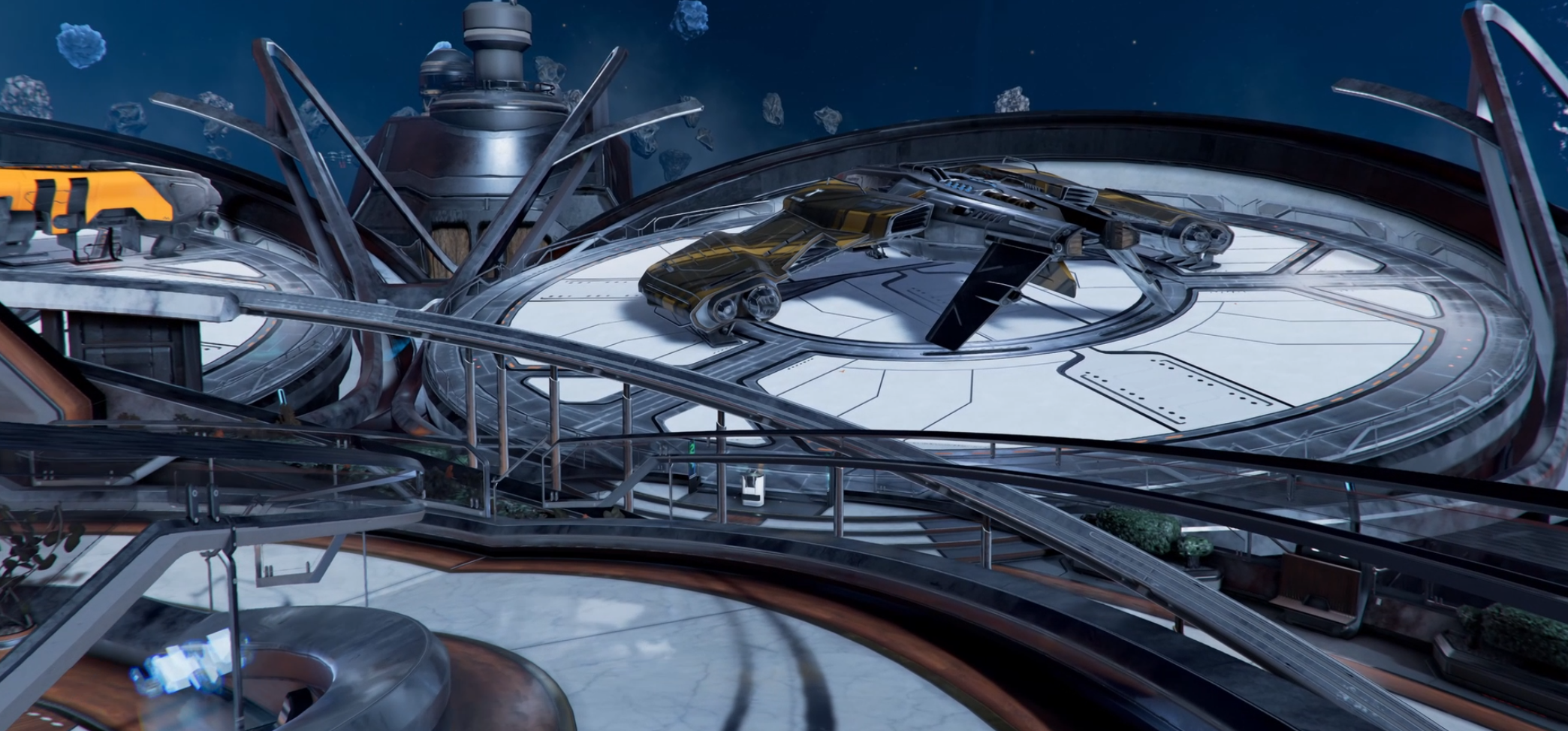
    9.00 업데이트와 함께 새로운 모듈인 함선 전시장이 추가되었습니다. 이 모듈을 통해 플레이어는 자신이 좋아하는 S 및 M급 함선을 세련된 착륙 패드에 전시하고 보관할 수 있습니다.

    하나 혹은 그 이상의 함선 전시장을 플레이어가 소유하고 있는 스테이션에 연결할 수 있으며, 여러 개를 결합해 대형 전시장 단지를 구성할 수도 있습니다. 모든 함선을 하나씩 모아보세요!

    UI 변경
    UI 시각적 스타일 전반에 걸쳐 조정이 이루어졌으며, 특히 맵 화면 메뉴 개선에 중점을 두었습니다. 맵 화면의 레이아웃과 스타일을 조정하여 가독성을 높이면서도 전체 정보 구조는 유지하도록 했습니다.

    UI 변경에 대한 자세한 내용은베타 피드백 포럼에서 확인하실 수 있습니다.

    개선된 NPC 스테이션 설계
    이전 업데이트에서 NPC 세력이 더 큰 스테이션을 건설할 수 있도록 했습니다. 이번 9.00 업데이트에서는 여기에 더해, 사전 정의된 건설 계획을 활용하고 확장할 수 있는 기능이 추가되었습니다. 이러한 설계를 기반으로 한 스테이션은 더 일관되고 정교한 외형을 가지며, 게이트 네트워크에 세워지는 스테이션들이 각 세력의 정체성을 더욱 잘 반영하게 됩니다.

    채광 지역 개편
    자원 지역 관리 방식을 전면 개편하면서 여러 목표를 동시에 달성했습니다. 그건 바로 성능 및 메모리 사용 개선, 자원 분포에 대한 개발자 제어 강화, 그리고 플레이어에게 더욱 역동적인 채굴 경험 제공입니다. 이제 자원은 전체 지역에 퍼져 있지 않고 국지적으로 분포합니다. 또한 특정 자원이 고갈되면 같은 지역 내 다른 위치에서 새로운 자원이 생성될 수 있습니다.

    이로 인해 채광 작업에는 새로운 역동성이 생기게 되는데, 자원을 채취하기 전에 먼저 탐색해야 합니다. 채광선은 자동으로 효율적인 채광 위치를 찾아 이동하게 되며, 자원 가용성이 계속 변하게 됩니다.

    또한 자원 탐사정이 채광 효율에 미치는 영향을 제거했습니다. 이제 자원 탐사정은 채광선에 집중하여 작업해야 할 위치를 알려주는 역할만 하며, 플레이어는 이를 통해 정제 및 방어 구성을 최적화할 수 있지만 자원 탐사정을 세밀하게 관리해야 하는 부담은 줄어들었습니다.

    새로운 자원 시스템에 대한 자세한 내용은 베타 피드백 포럼 글을 참고해 주세요.

    감사합니다! X4: 파운데이션을 플레이해 주시는 모든 분들께 에고소프트 팀을 대표하여 감사의 말씀을 드립니다. 9.00 업데이트를 즐겁게 플레이하시길 바랍니다!

    제국 업데이트는 베타를 벗어났지만, 아시다시피 저희는 게임 개발을 멈추지 않습니다. 앞으로도 계속해서 피드백을 보내주세요, 저희는 계속해서 귀 기울이겠습니다.

    >> X4 9.00 Changelog
    posted by Gregory
    03.Jun.26 X4 제국 업데이트(9.00)가 2026년 6월 10일 출시됩니다
    X4: 파운데이션 제국 업데이트(9.00)가 2026년 6월 10일에 출시될 예정임을 알려드리게 되어 기쁩니다!


    제국 업데이트는 X4 내 제국의 모든 측면을 변화시킵니다. 함선과 그 로드아웃의 균형, 명령을 내리는 방식, 섹터 내 자원 분배 방식, 파일럿의 효율성, 그리고 우주 전반에 걸친 무역, 생산, 스테이션 건설의 가능성까지 포함됩니다.

    이번 업데이트는 X4 역사상 가장 큰 규모의 밸런스 조정을 포함합니다: 수백 가지의 무기, 보호막, 함선에 대해 성능이 낮았던 요소를 개선하고, 다양한 로드아웃 선택이 실질적으로 활용 가능하도록 대대적으로 재작업되었습니다. 함선의 장착 설계점에 대한 변경으로 더 폭넓은 모듈을 다양한 함선에 장착할 수 있게 되어 이러한 다양성이 한층 더 강화되었습니다. 또한 다수의 AI 개선을 통해 파일럿이 보다 지능적으로, 그리고 함대 내 역할에 맞게 행동하도록 변경되었습니다.

    새로운 우선 명령 시스템을 통해 맵에서 함선을 실시간 전략 게임 스타일로 즉시 제어할 수 있게 되어, 역동적이고 도전적인 전투 환경 속에서 함대를 더욱 빠르게 지휘할 수 있습니다. 이 새로운 기능은 전반적인 UI 개선과 함께 제공됩니다.

    한편, 자원 시스템이 전면적으로 개편되어 자원 획득 과정이 간소화되었으며, 자원이 고갈되면 섹터 내 다른 곳으로 위치가 변경되어 은하의 지형이 더욱 역동적으로 변화합니다.

    이와 함께, 카악 함선을 해체하여 새로운 자원을 획득할 수 있게 되었습니다. 이 자원은 니비듐과 결합하여 생산 과정에서 다른 어떤 자원도 대체할 수 있는 범용 자원이 됩니다. 이는 생산 병목을 완화하는 동시에 폐품 처리 작업과 무역에 새로운 기회를 제공합니다.

    또한 새로운 스테이션 모듈인 함선 전시장이 추가됩니다. 플레이어는 이 모듈을 이용해 자신이 좋아하는 함선을 전시할 수 있으며, 열성적인 수집가라면 전용 전시장 단지를 건설해 자신의 방대한 컬렉션을 즐길 수도 있습니다.

    제국 업데이트는 매우 포괄적인 업데이트이며, 이 외에도 다양한 변경 사항이 기다리고 있습니다. 개선 및 추가된 내용에 대해 더 알고 싶다면 자세한 발표 내용을 확인해 주세요.

    X4: 파운데이션을 플레이해 주시는 모든 분들께 감사드리며, 특히 베타 테스트에 참여해 피드백을 주신 분들께 깊이 감사드립니다. 다음 주에 출시되는 9.00 업데이트의 모든 개선된 부분을 즐겨주시길 기대하겠습니다.
    posted by Gregory
    22.May.26 Interview with Helge Kautz: Loremaster of the X Universe  (0 댓글)
    We’re very excited to share a new episode of the Inside Egosoft podcast. Join our new host, Joey, as he speaks with members of the Egosoft team about their work and ideas. In this episode, he sits down with Helge Kautz, our loremaster. Helge is responsible for much of the worldbuilding in the X universe, having written multiple tie-in novels and being our go-to source for anything involving lore.


    If you’re interested in exploring the lore further, we encourage you to check out the X Encyclopedia on the Egosoft website, as well as the tie-in novels.

    For those who prefer to read, below you’ll find a breakdown of Joey’s discussion with Helge.
    Be sure to tune in next month for another episode!

    Listen to the Inside Egosoft Podcast:Helge Kautz: Loremaster of the X Universe
    Joey: For people who might only know your name from the game credits or the novels, how would you introduce yourself and describe your role at Egosoft today?

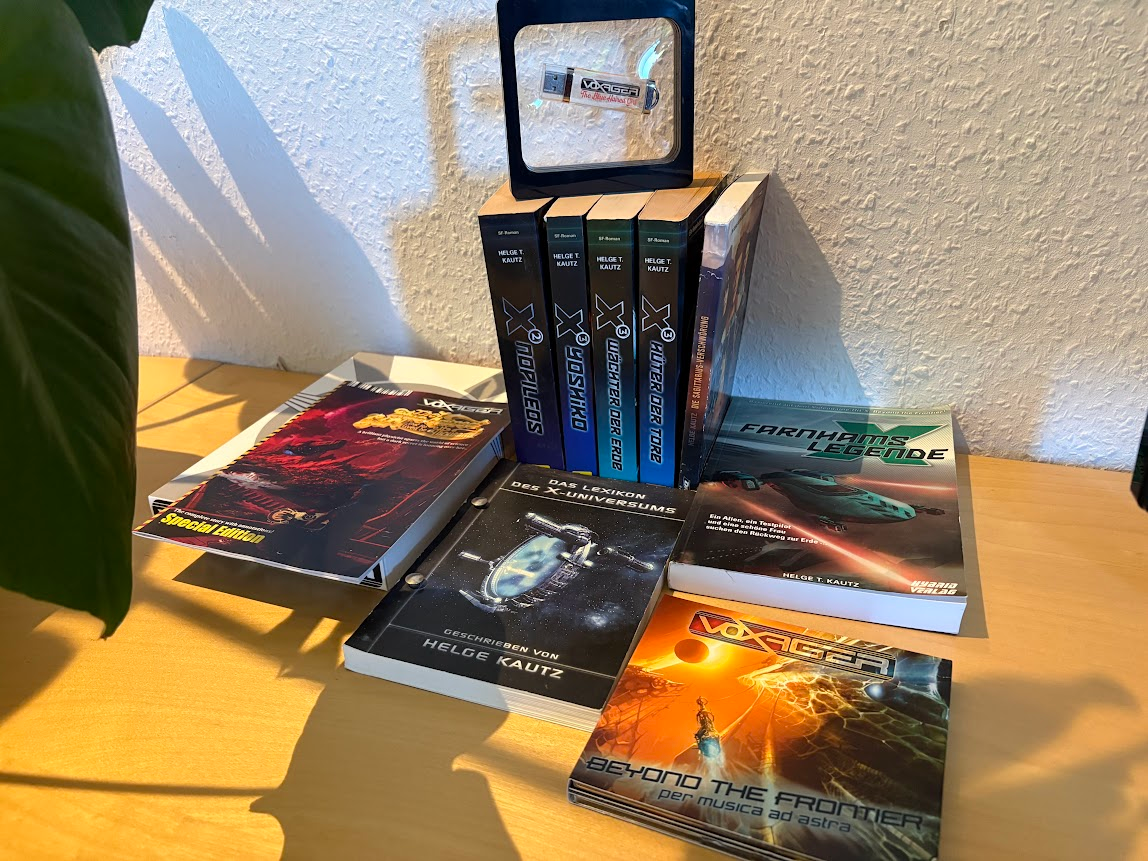
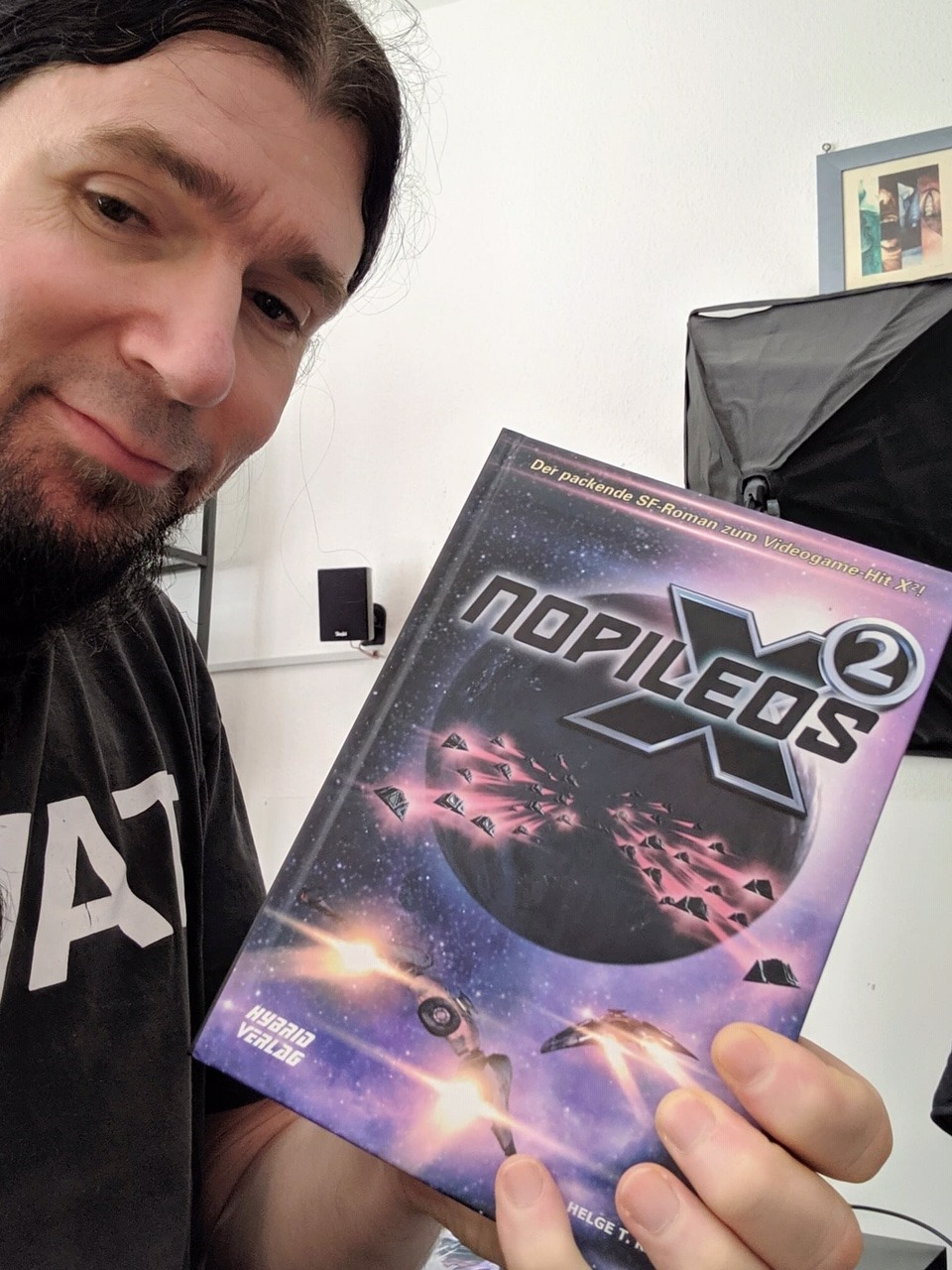
    Helge: I’m Helge. I’ve been working with Egosoft for 25 years or more, most of that time as a freelancer. I’m the author of the tie-in novels. There are five novels set in the X Universe, and I originated a lot of the back lore from the games. Now that I’ve been working directly for Egosoft for about a year and a half, I’m the loremaster, as well as an author and narrative director. That’s my role.

    A Typical Day Building the X Universe
    Joey: You mentioned you’re working full-time for Egosoft now. What does a typical day look like for you, if such a thing is even possible?

    Helge: I typically come in, grab something to eat, and read through my work email to see if there’s information I should be aware of. There’s lots of interesting stuff there. Then I check my Discord mentions to see if anyone has tagged me and whether I need to respond. After that, I’ll have tasks like writing dialogue for an upcoming DLC or similar narrative work. That’s what I spend most of my time doing. From time to time, someone has lore questions or wants me to name something, and I’ll do that instead. So the day is maybe 75% typical, and the rest isn’t.

    Writer First, Game Developer Second
    Joey: You’ve been writing for a long time. How do you look at yourself these days? Are you a writer who works in games, or a game developer who writes?

    Helge: I’m a writer first. A novelist is probably the right word. That’s what I am, and I’m always thinking as a novelist. I happen to write in game development, which requires different rules, but first and foremost, I’m a novelist. That has always been my passion and still is.

    Early Science Fiction Influences
    Joey: Can you talk about some of your early influences — books, films, or games that shaped how you write?

    Helge: When I was about eight or nine years old, there was a science fiction book series for children. My grandparents would give me one of those books for my birthday and Christmas, and I devoured them. That really kick-started my passion for science fiction. The series had something like 30 books. There were also science fiction audio dramas. One was Commander Perkins. I’m not sure if it exists in the English-speaking world, but it was an action-packed series about a transporter device that takes people into different worlds and times. I loved that one. Then there’s the long-running German science fiction series Perry Rhodan, which I also read. As I got older, I moved on to authors like Larry Niven, Robert Heinlein, Arthur C. Clarke, and Orson Scott Card. Those stayed with me.

    The Influence of Larry Niven
    Joey: Are there any in particular that had a lasting impact on how you write?

    Helge: Definitely Larry Niven. You may know the Ringworld series. He also has the Known Space series, including Ringworld Engineers, as well as books like The Integral Trees and The Smoke Ring. I read everything Niven wrote through the ’70s, ’80s, and ’90s. He’s my biggest role model, and I try to emulate aspects of his writing.

    Science Fiction Grounded in Reality
    Joey: What does that mean to you — his way of writing?

    Helge: Niven tries to be scientifically accurate as much as possible, then introduces one unproven element like faster-than-light travel. Apart from that, everything feels grounded. He has colorful worldbuilding and great characters. Sometimes the character writing is very emotional. I love that, and I try to do the same.

    From X: Beyond the Frontier to Farnham’s Legend
    Joey: How did you first start writing for the X Universe? What was your first interaction with Egosoft like?

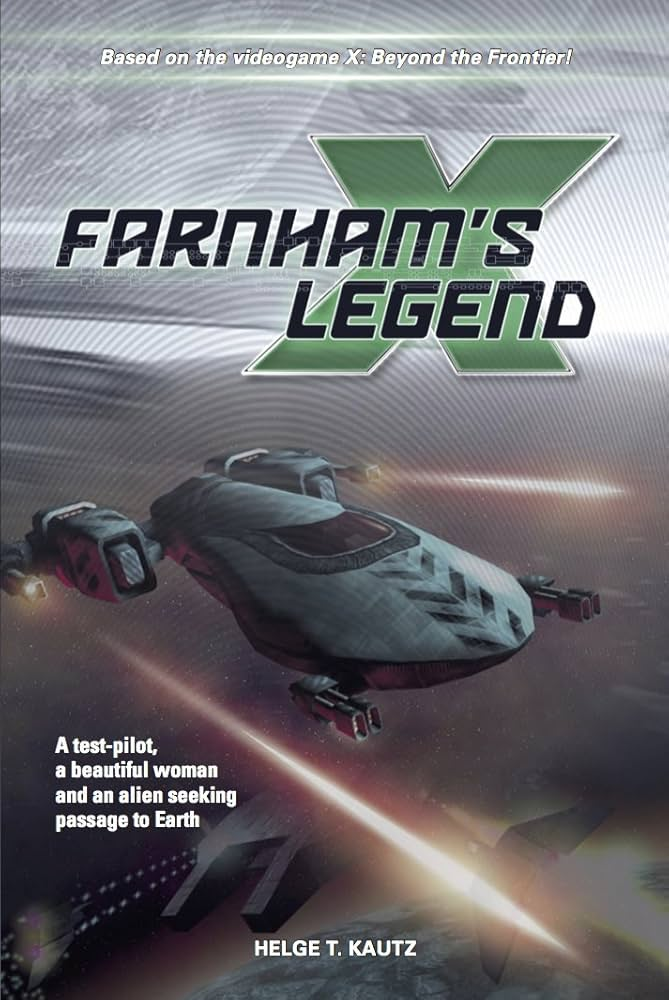
    Helge: I’d been writing since I was about 13. In the late ’90s, I was working for THQ, the German publisher for Egosoft at the time. The sequel to X: Beyond the Frontier was being planned, and since I was part of the marketing team, there was discussion about including a bonus item in the expansion package — what today would be DLC. I suggested writing a tie-in novel. Everyone laughed. They said, “You’re the webmaster. Why would you write a novel?” I said I was sure I could do it. They asked me to write a demo chapter. I spent about six weeks planning, wrote it, and they said, “That’s not so bad. Let’s try it.” THQ then asked me to write the full novel, which became Farnham’s Legend.

    Writing Novels vs. Writing for Sandbox Games
    Joey: The X games are very open-ended sandboxes. How does writing for that universe differ from writing a fixed narrative?

    Helge: From day one with Farnham’s Legend, it was clear the book is not the game, and the game is not the book. There are game mechanics you can’t really write into a novel because they would feel silly. In the game, they feel normal, but it’s different in prose.

    Building the Lore of the X Universe
    Joey: How do you approach building a universe?

    Helge: Many authors start with planets and species. I don’t. I start with story and characters, and how they interact. Questions come up naturally. If we’re 1,000 years in the future, how do genders interact? Is there still marriage? As I write, I fill in these details and keep separate notes. My worldbuilding happens during writing, not before.

    Hidden Details Players Might Miss
    Joey: Is there lore you’re especially proud of, even if players might not notice?

    Helge: There’s a lot people don’t know. For example, the meaning behind Teladi three-word names and their numerical elements. I have detailed explanations for that. There’s the marriage system in the Argon Federation and how it evolved. Language shifts over centuries. Cultural changes. There’s also what I call the “Argon phenotype,” referring to how humans in the Argon Federation look slightly different due to separate development.

    Factions, History, and Isolation
    Joey: Do you have a favorite faction?

    Helge: The connection between the Argon and the Terrans is especially interesting — Earth, the discovery of the jump gates, the Terraformer War, and 750 years of lost contact. Something similar happened to the Teladi, who were cut off from Ianamus Zura without knowing the Terraformer War was responsible. Aldrin was also isolated due to Argon political decisions. There are many intertwined stories like that.

    Collaborating with the Development Team
    Joey: What’s it like collaborating with designers and artists at Egosoft?

    Helge: Anything lore-related comes to me. If something changes about a species — size, eyes, fingers — I’m consulted. For example, the Split should have six fingers. I check things like that for lore accuracy. I also name most things now. I don’t influence weapon types or ship mechanics. I focus on naming and lore consistency.

    The Challenge of Player-Driven Storytelling
    Joey: Do you ever have to cut ideas you love?

    Helge: Yes. The game is meant for players to create their own stories. I’d love to tell very specific character stories, but that isn’t always possible. That hurts sometimes, but it’s part of the process.

    Looking Beyond the Current Timeline
    Joey: What keeps you motivated after all these years?

    Helge: We’re going to pass the year 825 eventually, where X4 is currently set. I’m excited to go beyond that point and explore the future of the universe.

    How Far Ahead the Lore Is Planned
    Joey: How far ahead have you planned?

    Helge: Very far. I wrote a pitch set about 2,000 years beyond the current timeline, around the Earth year 5600. I know where things are going, but we won’t see that in the games anytime soon.

    Advice for Aspiring Writers
    Joey: Any advice for aspiring writers or worldbuilders?

    Helge: Consume the medium you love as much as possible. If you want to write science fiction, read it constantly. Watch it, absorb it. Then write. Don’t expect your first work to be AAA quality. If you’re passionate and keep creating, you’ll grow into it.

    Where to Start Exploring the Lore
    Joey: If players want to dive deeper into X lore, where should they start?

    Helge: The Encyclopedia of the X Universe on the Egosoft website is the best starting point. It’s a bit hidden right now, but we want to bring it forward more. It’s about 15 years old, but the core is still accurate, and I’m working on updates. Then, of course, the novels. They’re the best entry point into the lore.

    Final Words to the Community
    Joey: Any final remarks?

    Helge: Thank you very much for the opportunity to talk about the X Universe. If players have questions about the lore, they can post on the forum or message me there. I’m happy to answer what I can.
    posted by Gregory
    11.Mar.26 X4: 파운데이션 9.00 제국 업데이트 공개 베타가 시작되었습니다!
    X4: 파운데이션 "제국 업데이트" (9.00) 공개 베타를 드디어 공개합니다! 이번에 무료로 제공하는 주요 업데이트에는 여러분의 전투, 전략, 경제 등 상호작용 방식에 영향을 줄 다양한 요소와 재작업이 포함되어 있습니다.


    제국 업데이트는 수백 가지 무기, 함선, 그리고 보호막의 밸런스를 조정하는 한편, 조종 실력을 한층 시험하게 될 전투 시스템의 전면적인 개선을 도입했습니다. 여기에 다양한 AI 향상까지 더해져, 전투는 더욱 역동적이고, 도전적이며, 보람찬 경험이 될 것입니다.

    전투 시스템 내부적인 개선 외에도, 플레이어 여러분이 오랫동안 요청해온 우선 명령 기능이 추가되어, 빠르고 효율적으로 명령을 내릴 수 있습니다. 이제 제국 업데이트로 더욱 치열해진 전투 속에서도 함대를 매끄럽게 지휘할 수 있습니다! 또한, 9.00 업데이트에 새롭게 도입된 기술 덕분에 함선의 시각적 품질이 향상되었으며, 로드아웃의 다양성도 크게 증가했습니다.

    이번 업데이트에는 전투 외적인 중요한 변화들도 포함되어 있습니다. 이제 카악 함선을 재활용하여 경제를 추가적으로 견인하는 다용도의 신소재로 전환할 수 있으며, 자원 지역 시스템의 대대적인 개편을 통해 고갈된 지역에서 자원이 다시 생성되는 방식에도 변화가 생겼습니다.

    이 밖에도 수집가 여러분을 위한 새 함선 전시장 스테이션 모듈, UI 및 지도 메뉴 개선, 각 세력의 정체성을 강조하는 더욱 정교한 NPC 스테이션 등이 추가되었습니다.

    자세한 내용과 전체 변경 사항은 본 게시물에서 확인하실 수 있으며, 공개 베타에 참여하여 직접 업데이트를 체험해보세요.

    >> X4 9.00 공개 베타 1 변경사항

    공개 베타에 어떻게 참여할 수 있습니까?
    X4: 파운데이션을 보유하신 모든 플레이어 여러분은 새로운 9.00 공개 베타 버전을 다운로드하실 수 있습니다. 모든 베타 참가자들이 관련된 위험과 규칙을 숙지할 수 있도록, 관심이 있으신 플레이어는 저희 포럼에 방문하여 규칙과 경고문 그리고 베타에 참여할 때 유용한 설명문을 읽어보실 것을 요청드립니다. 이 링크를 통해 포럼으로 들어오시면 관련된 정보를 찾으실 수 있습니다. (로그인이 필요하지 않습니다.)

    전투 메커니즘
    전투 시스템의 가장 큰 변화는 보이지 않는 곳에서 이루어졌습니다. 다양한 무기 조준 문제들을 세심하게 점검했습니다. 각각의 개선은 개별적으로 보면 미세한 변화일 수 있지만, 그 효과가 누적되면 전투의 감각과 결과에 큰 긍정적 변화를 가져올 것입니다.
    • 터렛의 명중률을 비약적으로 향상하였습니다.
    • 구축함은 메인 포대를 더 적극적으로 활용하며, 조향 및 터렛 성능 개선의 혜택을 받습니다.
    • AI 조종사 조준 방식이 더욱 자연스러워졌습니다. 조종사의 숙련도에 따라 회피 기동과 측면 이동이 조준을 더욱 어렵게 만듭니다.
    9.00 업데이트에는 여러 눈에 띄는 전투 기능이 향상되었습니다.

    • 이제 함선에는 무기 과열 요인이 생깁니다. 예를 들어, 다수의 무기를 장착한 함선은 더 빠르게 과열될 수 있습니다.
    • 이와 유사하게, 함선은 이제 보호막의 용량이나 재충전 속도를 수정하는 보호막 보정치를 가질 수 있습니다.
    • 엔진, 보호막, 무기의 주요 스탯이 함선 로드아웃 화면에 표시됩니다.
    • 어뢰를 조준할 수 있게 되었으며, 미사일 요격 기능도 전반적으로 개선되었습니다.
    • 탄약 재장전이 HUD에 표시됩니다.
    주력함 이동
    9.00에서는 무기 조준 개선 외에도 주력함의 이동 시스템을 전면적으로 재작업했습니다. 이 두 가지 변화가 결합되어 전투 성능에 큰 영향을 미칠 것입니다. 에고소프트 포럼에서 이 주제에 대한 특별한 테스트 요청을 확인하세요.

    함선 리밸런싱
    S급 및 M급 함선의 무기 크기와 연결 규칙이 변경됩니다. 이는 단순히 시각적인 개선뿐만 아니라, 무기 호환성 조정도 가능하게 합니다. 이로 인한 가장 중요한 변화는 새로운 함선이 기존 무기를 사용할 수 있고, 기존 함선이 새로운 무기를 사용할 수 있다는 점입니다. 에고소프트 포럼에서 이 주제에 대한 특별한 테스트 요청을 확인하세요.

    이번 업데이트에는 200개 이상의 무기 및 터렛, 90종 이상의 보호막, 그리고 200종이 넘는 함선에 대한 전면적인 리밸런싱이 포함되어 있습니다. 이 변화의 목표는 불일치를 해소하고, 전술적 깊이를 더하며, 강점과 약점을 보다 직관적으로 배분하는 것입니다.
    • 함선과 장비의 가격이 품질 수준을 더 잘 반영합니다.
    • 대형 함선은 소형 무기에 덜 취약해집니다.
    • 중장갑 및 고보호막 함선이 더 실용적인 선택지가 됩니다.
    • 세력별로 터렛 특징의 다양성이 강화되었습니다.
    카악 재활용
    9.00에서는 S급 및 M급 카악 잔해를 재활용할 수 있습니다. 새로운 재활용 과정은 알로그라파인이라는 변환형 자원을 생산합니다. 이 자원은 함선 제작 및 장비 생산에 사용될 수 있으며, 창고에 특정 재화가 부족할 경우 알로그라파인이 자동으로 변환되어 대체함으로써 자원 부족을 관리하는 새로운 방식을 제공합니다.

    알로그라파인 생산에는 니비듐이 필요하기 때문에, 니비듐의 수요가 증가하며 특히 채광 업종의 사업가들에게 새로운 무역 기회를 열어줍니다. 게이트 네트워크 전역의 일부 NPC 세력은 이 새로운 자원을 활용하기 위해 특수 재활용 스테이션을 건설할 것입니다. 에고소프트 포럼에서 이 주제에 대한 특별한 테스트 요청을 확인하세요.

    함선 외형 / 모듈 변경
    엔진과 보호막이 S급 및 M급 함선의 모델에 통합되어, 각 함선의 외형이 개선되고 장착 가능한 모듈의 다양성이 크게 증가했습니다. 이제 장비가 시각적으로 함선의 외형에 반영되지는 않지만, 이 변경 덕분에 함선 전체의 시각적 정체성을 더 일관성 있게 구성할 수 있게 되었습니다.

    또한 킹덤 엔드 확장판 이전에 추가된 모든 S급 및 M급 함선의 장착 설계점 위치가 새롭게 조정되었으며, 이를 통해 예를 들어 보론과 연합 함선이 서로의 모듈을 장착할 수 있고, 소형 무기 및 터렛을 더 폭넓게 사용할 수 있습니다. 이 과정에서 M급 함선이 사용하는 모든 중형 터렛이 새로 설계되었습니다.

    우선 명령
    우선 명령은 여러분의 요청에 따라 추가된 새로운 기능으로, 실시간 전략 게임처럼 즉각적인 명령을 빠르게 내릴 수 있도록 설계되었습니다. 우선 명령은 항상 일반 명령보다 먼저 실행되므로, 이제 어떤 함선에게 즉시 행동을 시킬 때마다 일일이 명령 목록을 정리할 필요가 없습니다!

    플레이어는 지도 화면에서 [CTRL] + [마우스 우클릭]으로 일반 명령을, [SHIFT] + [마우스 우클릭]으로 우선 명령을 즉시 내릴 수 있으며, [CTRL] + [SHIFT] + [마우스 우클릭]으로 우선 명령을 예약할 수도 있습니다. 이 입력 조합들은 서로 자유롭게 혼합하여 사용할 수 있습니다.

    이 단축키 조합을 통해 지도상 웨이포인트를 설정하거나, 명령 메뉴에서 모든 종류의 명령을 즉시 혹은 대기열로 설정할 수 있습니다. 예를 들어 급히 함선을 수리하거나, 잠금상자를 회수하거나, 특정 목표를 공격하고 싶을 때 복잡한 명령 대기열을 손대지 않고도 바로 실행할 수 있습니다.

    이에 따라 명령 메뉴의 작동 방식도 변경되었습니다. 이제 수정키를 누르지 않고 명령을 입력하면, 기존 대기열이 덮어쓰여집니다. 다만, 이전 방식이 더 익숙한 플레이어를 위해 이 동작을 반대로 전환하는 옵션도 제공됩니다.

    함선 전시장 모듈
    9.00 업데이트에는 새로운 스테이션 모듈인 함선 전시장이 추가되었습니다. 이 모듈은 좋아하는 함선을 스타일리시하게 전시하고 보관하는 데 사용할 수 있습니다. 전시장 모듈의 종류에 따라 S급 함선만 전시할 수도, S 및 M급 함선을 함께 전시할 수도 있습니다. 직접 함선을 도킹하거나 조종사에게 명령해 도킹시키면, 그 함선은 무기한 전시장 패드에 전시됩니다.

    하나 이상의 함선 전시장 모듈을 기존 플레이어 소유 스테이션에 부착할 수도 있고, 독립된 전시장 스테이션으로 사용할 수도 있습니다. 함선 수집에 열정을 가진 플레이어라면 여러 개의 전시장 모듈로 구성된 대규모 함선 전시장 단지를 건설해 자신의 함대 자산을 감상할 수도 있습니다.

    단, 전시장 모듈이 파괴되거나 해체될 경우, 전시 중이던 함선은 모두 손실된다는 점에 유의하세요.

    UI / 지도 메뉴 변화
    게임 전반에 걸쳐 시각적 스타일을 정비하는 한편, 특히 지도 화면의 메뉴 구조를 중심으로 가시성 및 정보 배열을 개선했습니다. 가독성을 높이기 위해 일부 정보의 배치와 표현 방식이 달라졌지만, 정보 구조 자체는 대부분 동일하게 유지되었습니다.

    이번 변경에 대한 피드백은 앞으로의 업데이트에서 지도 화면뿐 아니라 다른 메뉴의 개선에도 반영될 예정입니다. 에고소프트 포럼에서 이 주제에 대한 특별한 테스트 요청을 확인하세요.

    향상된 NPC 스테이션 디자인
    이전 업데이트에서 NPC 세력이 더 큰 규모의 스테이션을 건설할 수 있도록 했습니다. 이번 업데이트에서는 그 기능을 확장하여, 세력 AI가 미리 정의된 스테이션 설계도를 활용하고 확장할 수 있게 했습니다. 이런 설계도를 기반으로 한 스테이션은 기존의 규격화된 건설 방식보다 더욱 정교하고 시각적으로 일관된 형태를 가지며, 각 세력의 디자인 철학과 시각적 정체성을 더욱 뚜렷하게 표현할 수 있게 됩니다.

    채광 지역 개편
    자원 지역 관리 시스템이 전면적으로 개편되어, 성능 및 메모리 효율이 향상되고, 자원 분포 관리가 더 정밀해졌으며, 플레이 경험 또한 풍부해졌습니다.

    지역 내 자원의 배치 방식이 바뀌었습니다. 이제 한 지역 내에서 자원은 전체적으로 고르게 분포하는 대신, 보다 국소화된 형태로 존재합니다. 특정 자원 지역이 고갈되면, 해당 지역 내 다른 위치에 새로운 자원이 생겨날 수 있습니다. 이에 따라 플레이어는 채취를 시작하기 전 새롭게 생성된 자원 지역을 찾아야 하므로, 자원의 가용성이 역동적으로 변화하고, 채굴 효율을 극대화하기 위한 탐색이 더욱 중요해집니다.

    앞으로의 계획
    다른 주요 업데이트와 마찬가지로, 공개 베타가 시작되었다고 해서 개발이 멈추는 것은 아닙니다. 이번 피드백 단계는 개발 과정의 핵심 부분이며, 저희는 내부 아이디어뿐 아니라 플레이어 여러분의 의견을 바탕으로 업데이트를 지속적으로 발전시켜 나갈 것입니다. 경험과 의견을 공유하고 싶으시다면, Public Beta Feedback 포럼에 방문해 주세요. 여러분의 목소리가 최종 버전의 완성도를 높이는 데 큰 도움이 됩니다.

    여러분의 성원에 감사드립니다!
    posted by Gregory
    13.Feb.26 Support for Cross-platform Cloud Saves  (16 댓글)
    UPDATE: These changes have now been applied. Please take a moment to review the instructions in the original news post and follow them carefully.

    We're preparing some changes in order to support cross-platform cloud saves between Windows, Linux, and Steam Deck for X4: Foundations. For the vast majority of players, this transition will be completely seamless and will require no action.


    The changes can, however, affect players who regularly play on Linux computers. Steam Deck players are not affected, unless a native Linux runtime was explicitly selected in the Steam Deck settings for X4.

    The changes are planned to happen on Thursday, February 19, 2026 at 15:00 CET (14:00 UTC, 6am PST, 9am EST, 22:00 CST - see in your timezone).

    What this means:
    • After these changes, the Steam Cloud will sync savegames and game settings across Windows, Linux, and Steam Deck.
    • For most players, nothing needs to be done.
    • For Linux desktop players, there is a risk that saves and settings get lost. To avoid that, please see the instructions below.
    Instructions:
    If you have X4 savegames on a Linux machine that you would like to keep, please make backups of them. We highly recommend doing that before the changes take effect. Making backups is generally also a good idea on Windows. See the save locations below.

    Additionally, after our changes are in place, please follow these steps:
    • Restart the Steam client on your Linux machine
    • Run X4 on your Linux machine
    • Exit X4 (Steam will update the files in your Steam Cloud)
    This makes sure that your saves and settings get migrated properly in the Steam Cloud. If you do not follow these steps, there is a risk that they will get lost when you first play the game on a different machine.

    Locations of saves and settings:

    Windows:
    Documents/Egosoft/X4/--steamid--

    Linux:
    ~/.config/EgoSoft/X4/--steamid--

    Steam Deck (default Proton runtime):
    ~/.steam/steam/steamapps/compatdata/392160/pfx/drive_c/users/steamuser/Documents/Egosoft/X4/--steamid--

    --steamid-- stands for a unique number that represents your Steam account.

    If you cannot find your saves in the locations above, you may still find them stored in the Steam Cloud. You can manually download them from the Steam Cloud website and place them in your local savegame folder.

    Additional info:
    Previously, the Steam Cloud had distinct storage locations for Windows files and for Linux files. This meant that saves did not automatically sync across the two platforms. (At the moment, the Steam Deck uses the Windows version of X4 by default, so it syncs with a Windows PC, but not with a Linux PC.)

    With the changes, both Linux and Windows save files will be stored in the Steam Cloud with a Windows-like path. Upon syncing files from the Steam Cloud to a Linux machine, the paths will be translated to the corresponding Linux location on the disk, so that files are downloaded from and uploaded to the Windows location. Linux players will need to play the game at least once on Linux, so that Steam will upload any existing Linux files to the new cloud location.

    These changes are an important step toward improving Linux and Steam Deck support for X4: Foundations (particularly, allowing us to use the native Linux version on the Steam Deck by default). They also enable a number of fixes and improvements that we’ve wanted to deliver for quite some time.

    Thank you for your patience and your support.
    posted by Gregory
    Find older news in our archive...
    Community
    Users: 382964
    Logged in: 17
    Latest Screenshot
    Latest Screenshot
    X4: Foundations
    Details ORDER NOW Details
    X Rebirth
    Details ORDER NOW Details

    [ Disclaimer / Impressum ] | [ Privacy Policy / Datenschutz ]
    [ Fan Content Policy / Richtlinien für Fan-Inhalte ]

    Copyright © EGOSOFT 1990-2026